
Spanish is a language full of fun sounds and double meanings. This makes it perfect for jokes and puns. Even simple words can turn into great punchlines.
Jokes in Spanish are popular with kids, teens, and adults alike. They are often used in classrooms to make learning fun. They also work great for parties, texts, or just making a friend laugh.
In this list, you’ll find silly puns, clever one-liners, and classic Spanish jokes. Some are simple wordplay. Others use humor found only in the Spanish language. Get ready to laugh and maybe learn a new phrase too.
Why Spanish Jokes Are So Popular
Spanish jokes are popular because the language itself is built for wordplay. Many Spanish words sound alike but mean completely different things. This creates natural opportunities for clever double meanings.
Here are a few reasons Spanish humor connects with so many people:
- Playful sounds: Spanish rhymes and rhythms make jokes catchy and easy to remember.
- Cultural warmth: Humor is a big part of everyday Spanish-speaking culture, from family dinners to classrooms.
- Learning tool: Teachers often use jokes in Spanish to help students remember vocabulary.
- Shareability: Short jokes and puns travel easily through texts, social media, and casual conversation.
Because of this mix of sound, culture, and simplicity, Spanish jokes have become a favorite for language learners and native speakers alike.
Funny Spanish Jokes That’ll Make You Laugh
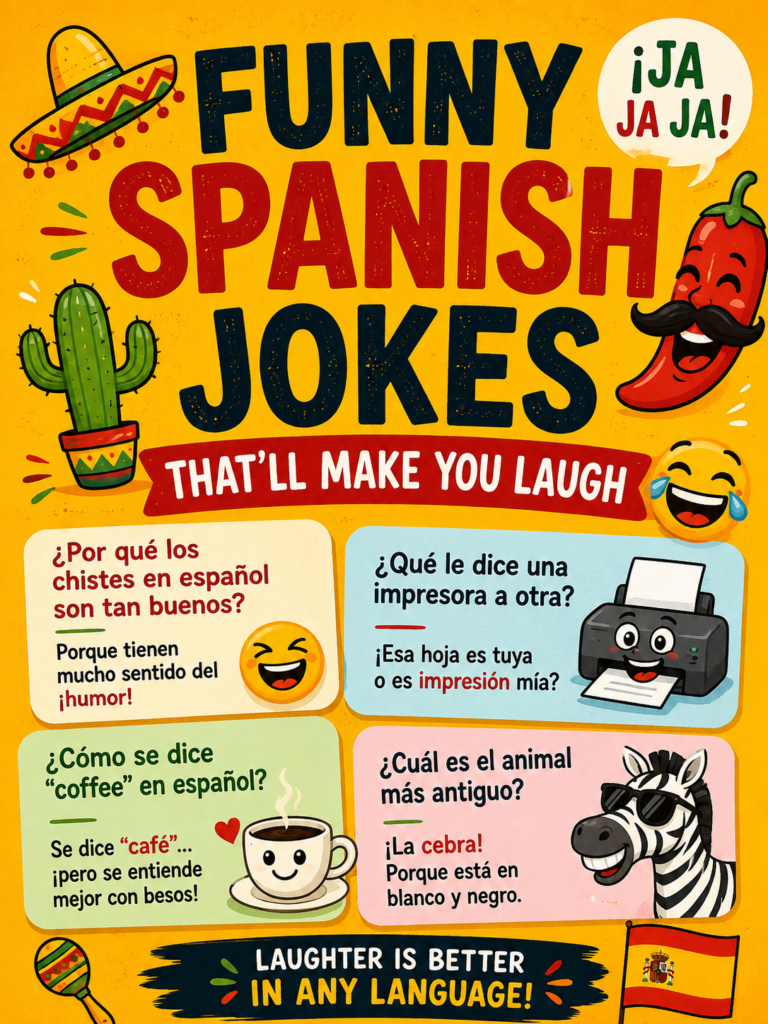
These jokes work well for general audiences and often use silly logic or unexpected punchlines.
- ¿Por qué el libro de matemáticas está triste? Porque tiene muchos problemas. (Why is the math book sad? Because it has too many problems.)
- ¿Qué le dijo un semáforo a otro? No me mires, me estoy cambiando. (What did one traffic light say to the other? Don’t look, I’m changing.)
- ¿Por qué el pez no usa computadora? Porque le tiene miedo al internet. (Why doesn’t the fish use a computer? It’s afraid of the “internet”/net.)
- Mi abuela dice que la edad es solo un número. El suyo es un número muy, muy grande. (My grandma says age is just a number. Hers is a very, very big number.)
- ¿Qué hace una abeja en el gimnasio? Zum-ba. (What does a bee do at the gym? Zumba.)
These jokes are lighthearted, easy to follow, and fun to say out loud.
Best Jokes in Spanish for Language Learners
If you’re studying Spanish, jokes are a great way to remember tricky vocabulary. These ones focus on simple grammar and common words.
- ¿Cómo se dice “amor” en inglés? Love. ¿Y “amor eterno”? Love forever… o problemas.
- Profesor: ¿Cuál es el plural de “lápiz”? Estudiante: Lápices, ¡pero yo solo tengo uno!
- ¿Por qué los estudiantes de español llevan diccionario a la playa? Porque nunca saben cuándo van a “sol”-tar una palabra nueva.
- Maestra: Usa “difícil” en una oración. Estudiante: Es difícil hacer esta tarea.
These jokes double as vocabulary practice, since you often need to know the meaning of a word to get the punchline.
Clean Spanish Jokes Everyone Will Enjoy
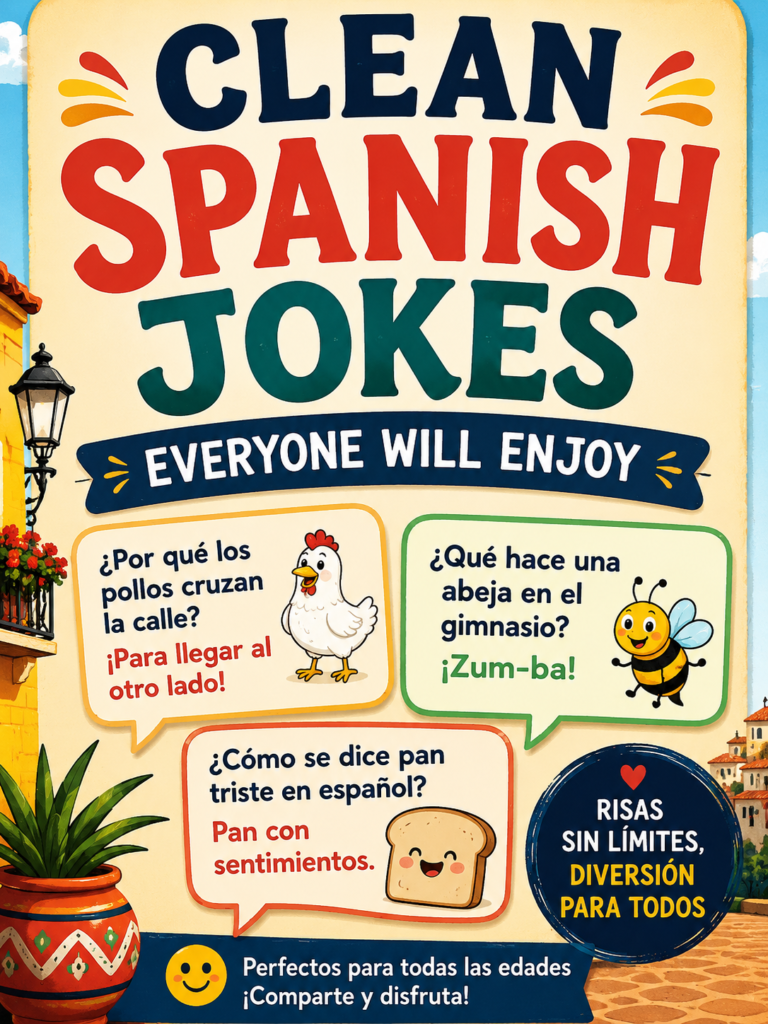
Sometimes you need a joke that works for every audience, from classrooms to family gatherings. These clean picks are safe bets.
| Joke Type | Example (Spanish) | Translation |
| Animal joke | ¿Qué le dice un pez a otro pez? Nada. | What does one fish say to another? Nothing / It swims. |
| School joke | ¿Por qué el libro de historia llora? Tiene demasiado pasado. | Why does the history book cry? It has too much past. |
| Food joke | ¿Cuál es el colmo de un panadero? Ganarse el pan todos los días. | What’s the ultimate irony for a baker? Earning bread every day. |
| Family joke | Papá, ¿tú eras bueno en matemáticas? Pregúntale a tu madre, ella sabe todo. | Dad, were you good at math? Ask your mom, she knows everything. |
Clean jokes like these are perfect for parties, classrooms, or breaking the ice with new Spanish-speaking friends.
Short Spanish Jokes with English Translation
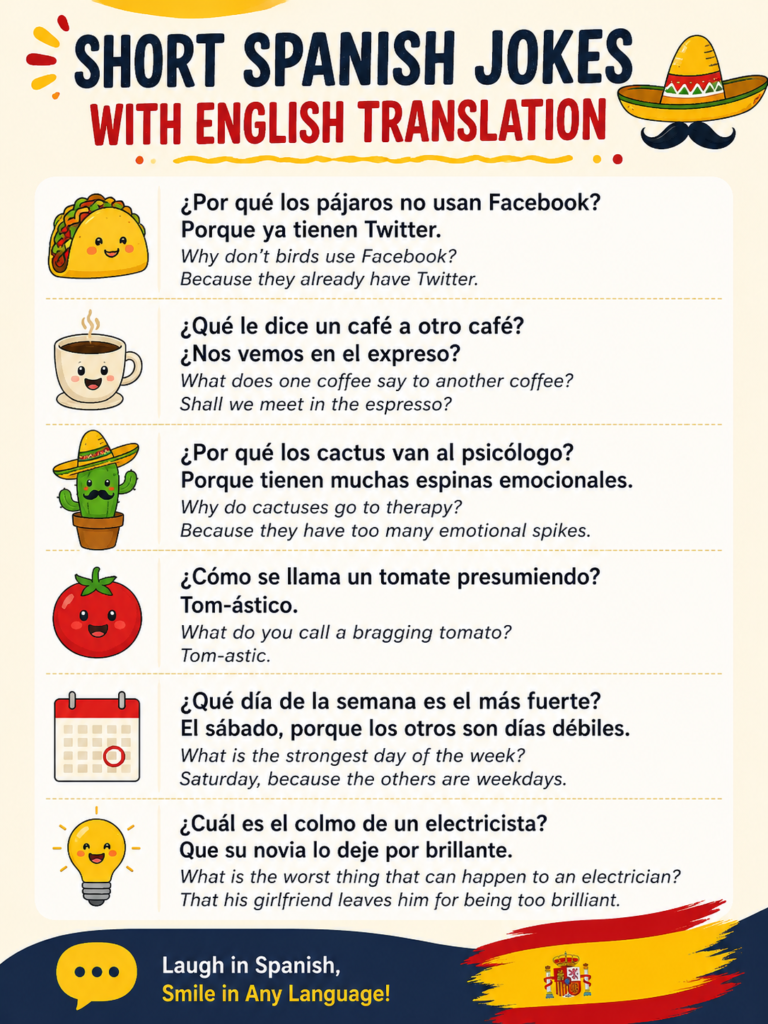
Short jokes are easy to memorize and quick to share. Here are some bite-sized favorites.
- ¿Cuál es el café más peligroso? El expreso. (What’s the most dangerous coffee? Espresso, which sounds like “express.”)
- ¿Qué hace una impresora tímida? Se imprime en voz baja. (What does a shy printer do? It prints quietly.)
- ¿Cómo se llama el campeón de buceo? Jack. (What’s the diving champion’s name? Jack, as in “Titanic.”)
- ¿Por qué los pájaros vuelan hacia el sur en invierno? Porque es muy lejos para caminar. (Why do birds fly south in winter? Because it’s too far to walk.)
Short jokes like these are ideal for social media captions or quick laughs during a conversation.
Hilarious Spanish Puns You’ll Love
Puns are where Spanish humor really shines, thanks to words that sound alike but carry different meanings.
- “Me canso, ganso.” This playful rhyme means “I’m tired, goose,” and is used as a silly way to say you’re exhausted.
- “Chao, chao, bacalao.” Literally “bye bye, codfish,” a fun rhyming way to say goodbye.
- “¿Qué le dice un techo a otro techo?” “Techo de menos” a play on “te echo de menos” (I miss you) and “techo” (roof/ceiling).
- “Obvio, microbio.” A rhyming way to say “obviously,” similar to saying “thank you, Captain Obvious.”
- “¿Qué tal, calabaza?” A rhyming greeting meaning “what’s up, pumpkin,” often answered with another silly rhyme.
These puns often rely on similar-sounding words, which is why native speakers find them so satisfying.
Spanish Jokes One-Liners
One-liners are perfect when you want a fast laugh without a long setup.
- Mi vida es como una telenovela, ¡pero sin el drama y sin el dinero!
- Estoy a dieta, pero mi estómago no recibió el memo.
- No soy perezoso, estoy en modo ahorro de energía.
- Si el ejercicio fuera fácil, se llamaría “siesta.”
- Mi cama y yo tenemos una relación muy seria.
These lines work well in casual chats, captions, or even small talk with Spanish-speaking friends.
Also Read Shrimp Jokes And Puns On Punello.com
Easy Spanish Jokes for Beginners
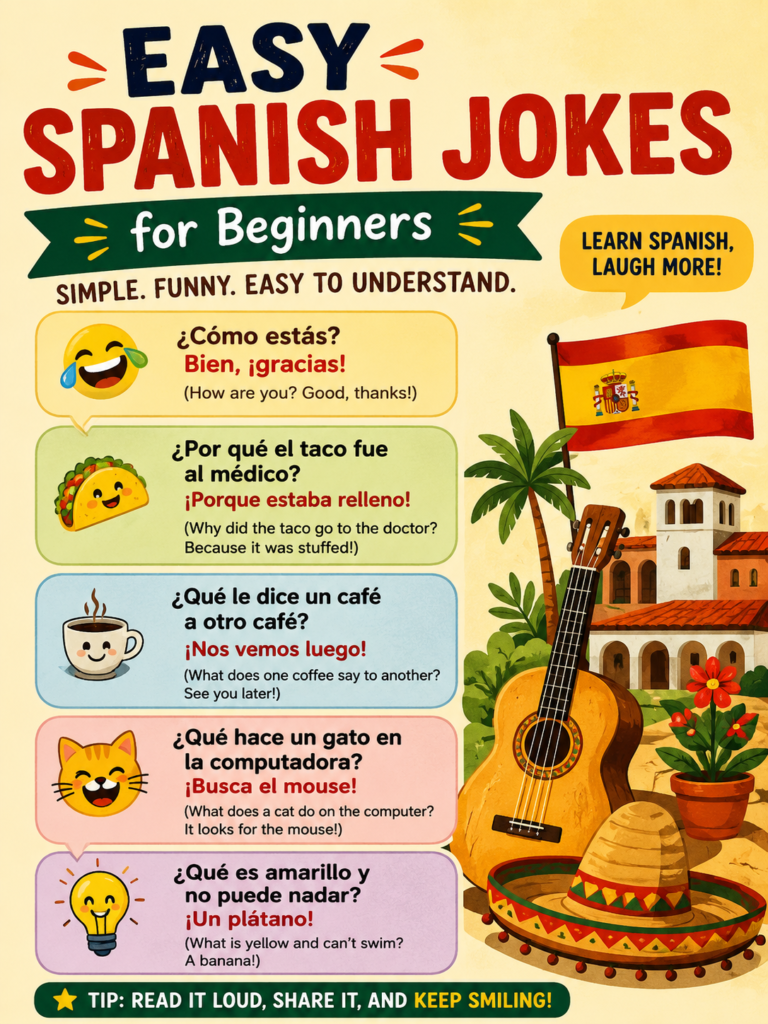
If you’re just starting out with Spanish, simple jokes with basic vocabulary are the best place to begin.
- ¿Cómo se llama el gato más famoso de España? El Gato Félix.
- ¿Qué dice un gato cuando pierde algo? Miau, ¿dónde está?
- Uno más uno son dos, dos más dos son cuatro, ¡y yo más helado son felices!
- ¿Qué animal es dos animales? El gato, porque es “gato” y también “araña gata” jugando.
These beginner jokes use everyday words, making them a fun way to build early confidence in Spanish.
How to Choose the Perfect Spanish Jokes
Picking the right joke depends on your audience and setting. Use this quick guide:
| Situation | Best Joke Type |
| Classroom or students | Easy jokes, vocabulary-based puns |
| Family gathering | Clean jokes, short one-liners |
| Texting friends | Short jokes, rhyming puns |
| Meeting new Spanish speakers | Simple, universally funny jokes |
| Social media captions | One-liners, quick puns |
Matching the joke to the moment makes it land better and keeps the humor appropriate for everyone listening.
Tips on Sharing Spanish Jokes the Right Way
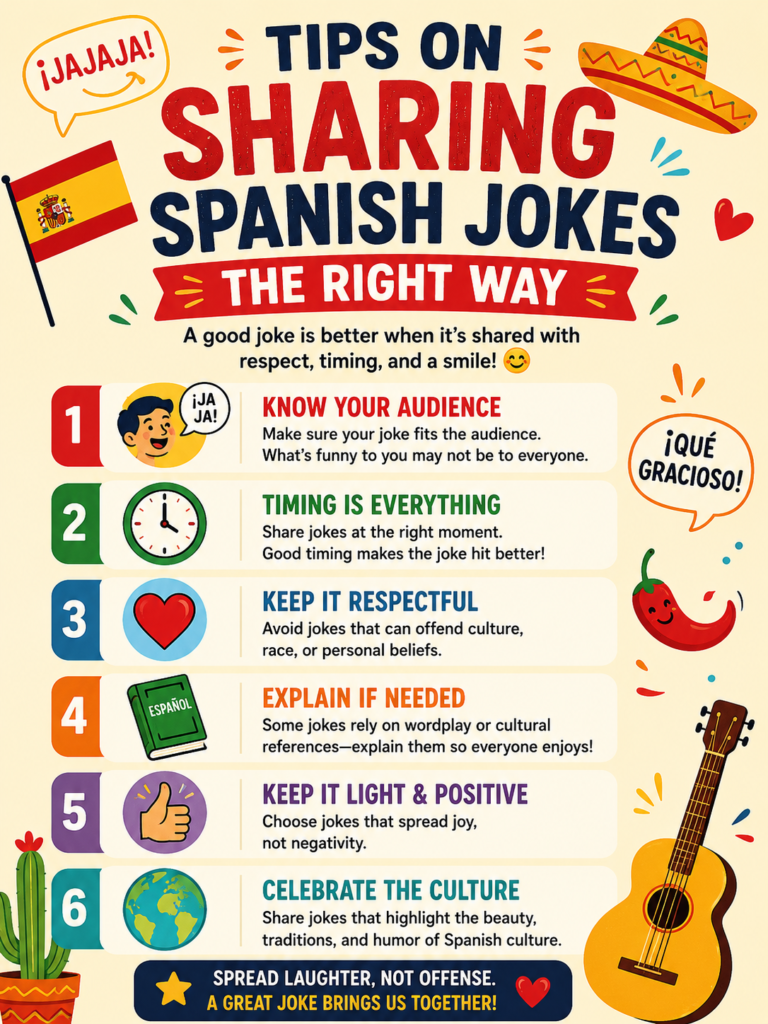
A great joke can fall flat with bad delivery. Keep these tips in mind:
- Keep it short: Simple jokes land faster than long, complicated ones.
- Explain if needed: If your audience isn’t fluent, add a quick translation so the joke still lands.
- Know your audience: Save wordplay-heavy puns for people who understand Spanish well.
- Use natural timing: Don’t rush the punchline; a good pause makes the joke funnier.
- Stay positive: Stick to lighthearted topics like food, animals, and daily life.
Following these tips helps your jokes get real laughs instead of confused looks.
Frequently Asked Questions
What is the word for joke in Spanish?
The word is “chiste.” A related word, “broma,” is used for a prank or lighthearted trick.
Are Spanish puns hard to understand for beginners?
Some are, since they rely on sound-alike words. Starting with simple jokes and translations makes them easier to grasp.
What makes Spanish jokes different from English jokes?
Spanish jokes often use rhyme and sound-alike words, since Spanish has many words with similar pronunciation but different meanings.
Can I use Spanish jokes to learn the language?
Yes. Jokes help you remember vocabulary and grammar patterns because the humor makes the words stick in your memory.
What are some easy Spanish jokes for kids?
Animal jokes and simple riddles work best, since they use basic vocabulary kids already know.
How do you say “that was a bad joke” in Spanish?
You can say “¡Chiste malo!” which is a playful way to react to a corny or predictable punchline.
Conclusion
Spanish jokes and puns show just how playful language can be. A single word can carry two funny meanings. That’s what makes this list so much fun to share.
Whether you’re learning Spanish or already fluent, these jokes bring a smile. Try them out with friends, family, or classmates. A good laugh is always worth sharing.

Hi, I’m an SEO specialist with a strong passion for digital marketing and search optimization. I focus on understanding how search engines work and how websites can improve their visibility through effective SEO strategies.
I enjoy working with data-driven approaches, including keyword research, on-page optimization, technical SEO, and content strategy. I believe every website has the potential to grow and reach new heights with the right techniques and consistent effort.
I value continuous learning and always stay updated with the latest trends and best practices in the digital world. My goal is to keep improving my skills and knowledge while exploring new opportunities in the field of SEO.