
“Huzz” is an internet slang term that became popular on TikTok and other social media platforms. It is often used as a playful or informal way to refer to women or girls, usually by young men. The word comes from a stretched-out spelling of “hoes,” though it is frequently used in a joking, non-serious tone.
The word gained traction around 2021 and 2022 through memes, comment sections, and short-form videos. Many creators used “huzz” in reaction videos, jokes, or captions to describe groups of women in a casual way. Over time, it became a recognizable piece of Gen Z internet vocabulary.
By 2026, “huzz” is still used online, though its popularity comes and goes with meme trends. Some people see it as harmless slang, while others find it disrespectful toward women. Its meaning and reception can vary a lot depending on context and audience.
A quick note: since “huzz” can carry a derogatory undertone depending on how it’s used, it’s worth being mindful of context if you’re writing about it for a broader audience — especially if this is going into published content. Want me to also draft a version explaining its more critical reception (e.g., discussions around it being sexist slang)?
The True Meaning of “Huzz”
“Huzz” is internet slang that refers to women or girls, usually in a casual or joking way. It works like a stretched-out, stylized version of the word “hoes.”
- It’s mostly used by young men online, often in a group or collective sense (“the huzz”).
- The tone can be playful, teasing, or mocking, depending on who’s using it.
- Some people use it without thinking much about the word’s rougher meaning.
In short: when someone says “the huzz,” they usually mean “women” or “girls,” often in an offhand, meme-style way.
Where Did “Huzz” Come From?
“Huzz” is an altered spelling of “hoes.” It takes the “ho” sound and stretches it with the “-uzz” ending, similar to how other slang words get remixed for social media.
Language trackers point to a specific origin story:
- The word is widely credited to streamer Kai Cenat, after a friend reportedly said it in one of his videos back in 2023.
- From there, it spread through TikTok clips, X posts, and YouTube comment sections.
- It picked up speed again through short-form video trends in 2025 and 2026.
It’s worth noting that “huzz” also has an older, unrelated meaning in English — a soft buzzing or murmuring sound, dating back centuries. The modern slang sense has nothing to do with that older word; it’s a coincidence of spelling.
Evolution from “Huzzah!” to “Huzz”
A common myth is that “huzz” comes from “huzzah,” the old-timey cheer meaning “hooray” or “victory.” It’s an easy mix-up because the words look alike, but they don’t share an origin.
| Word | Time Period | Real Meaning | Connection to Modern “Huzz” |
| Huzzah | 1600s–1800s | A shout of triumph or celebration | None — separate word entirely |
| Huzz (old) | 1500s onward | A soft buzz or murmuring sound | Unrelated, just similar spelling |
| Huzz (slang) | 2023–present | Slang for women, from “hoes” | The current, widely used meaning |
So while “huzzah” is a fun historical word, it isn’t actually where today’s slang “huzz” comes from. The resemblance is coincidental, not linguistic.
Also Read Huzz Meaning on Punello.com
How “Huzz” Is Used Online
“Huzz” shows up most often on TikTok, X (formerly Twitter), and YouTube, usually in captions, comments, or reaction videos. It’s typically used as a group noun for women rather than to describe one specific person.
Common patterns include:
- As a collective term: “Never trust the huzz.”
- In dating or relationship jokes: referring to women in a lighthearted or mocking way.
- In reaction content: creators joking about crowds of women at events.
- Paired with other “-uzz” slang: like “bruzz” (bro) or “gruzz” (a grumpy person).
Emotional Tone of “Huzz”
The tone of “huzz” depends heavily on context, but it generally carries a joking, informal energy rather than a serious or hostile one.
- Playful: used in memes and banter among friends.
- Teasing: pokes fun without being outright hostile.
- Occasionally dismissive: some uses lean closer to the word’s less polite root meaning.
Because “hoes” is considered disrespectful toward women, “huzz” can carry that same undertone even when it’s used casually.
Examples of “Huzz” in Sentences
Here’s how the word tends to appear in real online conversation:
- “Never go broke trying to impress the huzz.”
- “That’s why you don’t trust the huzz.”
- “He canceled plans for the huzz again.”
- “Gaining aura for the huzz” (caption under a video).
- “The huzz weren’t loyal, and now he knows it.”
Notice the word almost always appears with “the” in front of it, treating women as a group rather than referring to one individual.
Similar Slang Words to “Huzz”
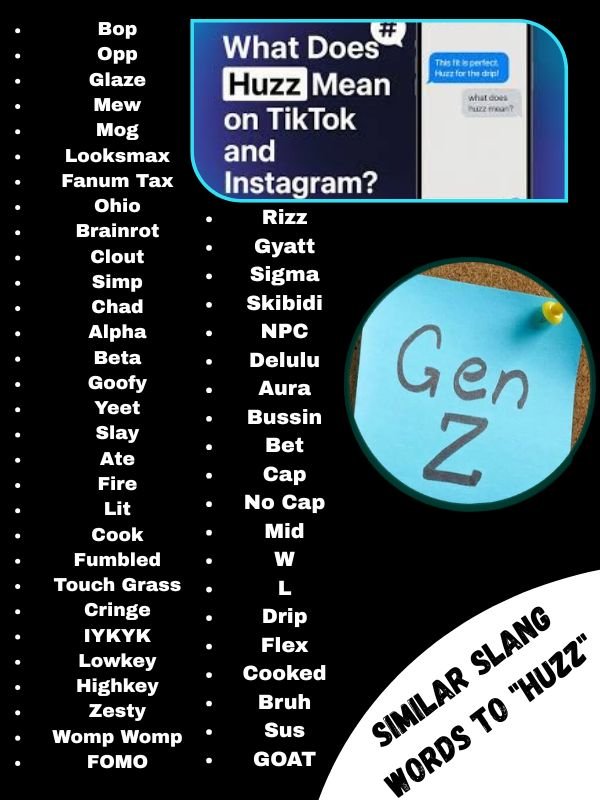
“Huzz” belongs to a small family of “-uzz” words that spread the same way, each naming a different group of people.
- Bruzz — a playful stand-in for “bro” or friend group.
- Chuzz — used for a broader, mixed group of people.
- Gruzz — describes a grumpy or negative person.
- Sluzz — used for someone acting overly dramatic.
These words follow the same joke format: take a familiar term, swap the ending for “-uzz,” and use it as internet shorthand.
Is “Huzz” the Same as “Huzzah”?
No. Despite looking alike, they are different words with different histories.
| Feature | Huzzah | Huzz |
| Origin | Old English cheer/exclamation | Alteration of “hoes” |
| Era | 1600s onward | 2023–present |
| Meaning | Hooray, triumph | Slang for women |
| Where it’s used | Historical texts, theater | TikTok, X, group chats |
They simply sound similar. The meanings and origins don’t overlap.
Cultural Influence of “Huzz”
“Huzz” is part of a bigger pattern where online creators reshape ordinary words into short, catchy slang that spreads fast through short-form video. Much like “rizz” before it, “huzz” caught on because it was easy to repeat, meme, and remix.
- It shows how a single video or creator moment (Kai Cenat’s clip) can push a word into everyday teen vocabulary.
- It reflects how slang tied to AAVE (African American Vernacular English) often becomes mainstream through social media.
- It illustrates the fast lifecycle of internet slang — some words stick around, others fade within months.
Linguistic Insight: Why “Huzz” Works
From a language perspective, “huzz” spread quickly for a few clear reasons:
- Short and easy to say: one syllable, quick to type.
- Fits a pattern: the “-uzz” ending connects it to other trending words.
- Group meaning: it labels a whole category of people in one word, which is useful for memes and jokes.
- Built-in edge: because it echoes a disrespectful word, it carries a bit of shock value that makes it “stick” in comment sections.
Regional and Subcultural Variations
“Huzz” isn’t used the same way everywhere. Its meaning can shift slightly depending on the online space:
- Gaming and Discord communities: often used in a joking, low-stakes way among friends.
- Dating and relationship content: leans more toward the original, less polite meaning.
- General meme culture: sometimes used loosely just because it’s trending, without much thought behind it.
Why People Love Using “Huzz”
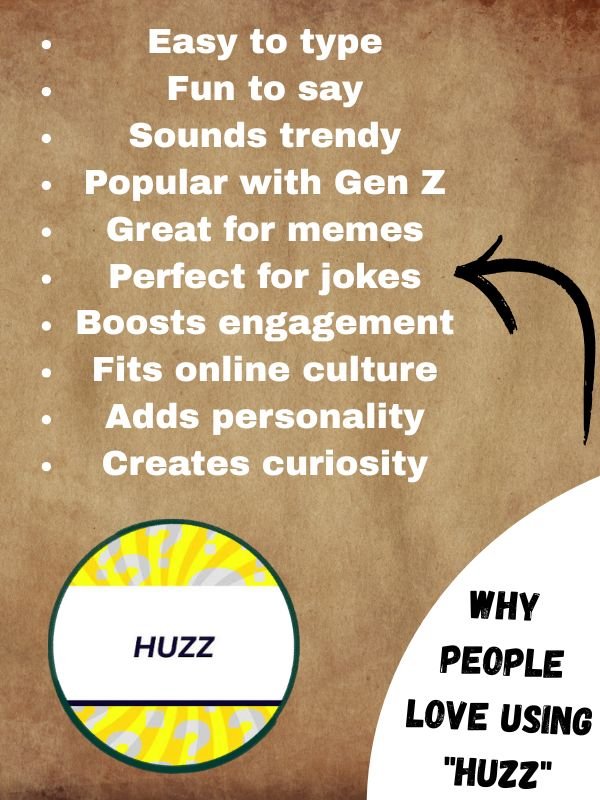
- It’s short, catchy, and easy to drop into a caption or comment.
- It signals that the user is plugged into current internet trends.
- It fits neatly into joke formats and reaction content.
- It connects to a wider set of “-uzz” slang, so using one word often means knowing several.
Common Mistakes with “Huzz”
- ❌ Assuming it’s harmless. It’s rooted in a disrespectful word, even when used jokingly.
- ❌ Using it in formal or professional writing. It’s strictly casual, internet-only slang.
- ❌ Confusing it with “huzzah.” They are unrelated words with different meanings.
- ✅ Understanding the context before repeating it, especially around people who may find it offensive.
Can “Huzz” Be a Name or Nickname?
Occasionally, yes — “Huzz” or “Huzzy” pops up as a short nickname or username on gaming and chat platforms, unrelated to the slang meaning. In that context, it’s simply a short, catchy handle rather than a reference to the trend.
The Psychology Behind “Huzz”
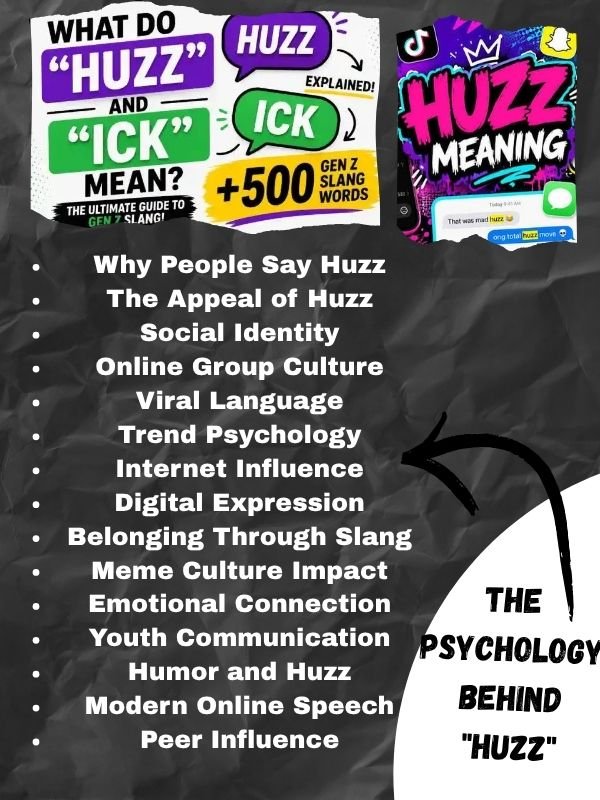
Slang like “huzz” spreads because it does more than describe something — it signals identity. Using trending words shows other young people that you’re online, aware of current memes, and part of the same digital culture.
- Belonging: using shared slang builds a sense of “in-group.”
- Humor: turning a blunt word into something silly-sounding (“huzz”) softens it, at least on the surface.
- Speed: short, punchy words fit the pace of platforms built around quick videos and comments.
Expert Insight
Linguists who study internet slang point out that words like “huzz” follow a familiar path: a creator says something in a viral clip, an online community repeats it, and within weeks it becomes shorthand across multiple platforms. What makes “huzz” notable is how it disguises an older, blunter word inside a newer, catchier one — a pattern common in slang that softens harsher terms without changing what they mean.
e it came from.
FAQ’s
What does “huzz” mean in internet slang?
“Huzz” is slang for women or girls. It comes from a playful spelling of “hoes.”
What does “huzz” mean in current slang?
It still means women or girls today. People often use it in a joking way.
Origin of the slang term “huzz”?
It started as internet meme slang around 2021–2022. It spread through TikTok videos and comments.
Is “huzz” a widely recognized slang word?
Yes, many young internet users know the term. But it is not used in formal or polite speech.
Examples of “huzz” used in online conversations?
“That huzz is not loyal” is a common meme phrase. It often appears in jokes about relationships or dating.
Where is “huzz” slang most commonly used?
It is mostly used on TikTok, Twitter/X, and Instagram. It is common among Gen Z social media users.
Conclusion (Final Thoughts)
“Huzz” is a slang word that grew popular through internet memes and short videos. It is mostly used in a joking way to talk about women or girls. Even though it started as a meme, many people still use it today.
Language on the internet changes fast, and “huzz” shows how quickly new words can spread. Some people find it funny, while others see it as disrespectful. As with most slang, it’s good to think about the situation before using it.

Hi, I’m an SEO specialist with a strong passion for digital marketing and search optimization. I focus on understanding how search engines work and how websites can improve their visibility through effective SEO strategies.
I enjoy working with data-driven approaches, including keyword research, on-page optimization, technical SEO, and content strategy. I believe every website has the potential to grow and reach new heights with the right techniques and consistent effort.
I value continuous learning and always stay updated with the latest trends and best practices in the digital world. My goal is to keep improving my skills and knowledge while exploring new opportunities in the field of SEO.